
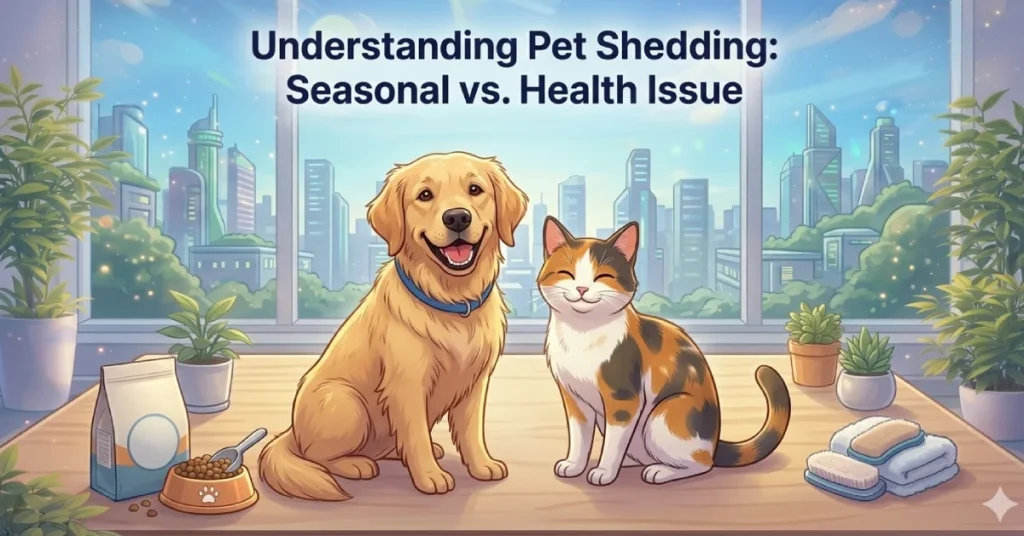
Introduction
If you’re a pet owner, you’ve probably noticed hair all over your home — on your sofa, clothes, or even floating in the air. Shedding can feel frustrating, especially when you’re not sure whether it’s completely normal or a sign of something more serious.
So, how do you know if your pet’s shedding is just seasonal… or a health issue?
The good news is that shedding is a natural process for most pets. However, in some cases, it can indicate underlying problems that need attention.
In this guide from Earth Paw Pets, you’ll learn how to clearly identify the difference between seasonal shedding and health-related shedding, along with practical tips to manage it effectively.
Understanding Natural Shedding
What is Seasonal Shedding?
Seasonal shedding is a normal biological process where pets lose old or damaged fur to make room for new growth.
This usually happens:
- During spring (losing winter coat)
- During autumn/fall (preparing for colder months)
Why Do Pets Shed?
Shedding helps pets:
- Regulate body temperature
- Maintain a healthy coat
- Remove dead or weak hair
It’s a necessary and healthy cycle.
Signs of Normal Shedding
Here’s how to recognize natural shedding:
- Hair loss is even across the body
- No itching or irritation
- Skin looks clean and healthy
- Your pet behaves normally
👉 If these signs match, your pet’s shedding is likely normal.
Understanding Shedding by Pet Type
Dogs vs Cats Shedding Patterns
- Dogs usually shed seasonally, especially those with thick coats
- Cats often shed more consistently throughout the year
Indoor pets may shed all year due to controlled environments.
Long-Haired vs Short-Haired Pets
- Long-haired pets: Shed in visible clumps
- Short-haired pets: Shed smaller amounts more frequently
👉 Both shed — just differently.
When Shedding Might Be a Health Issue ⚠️
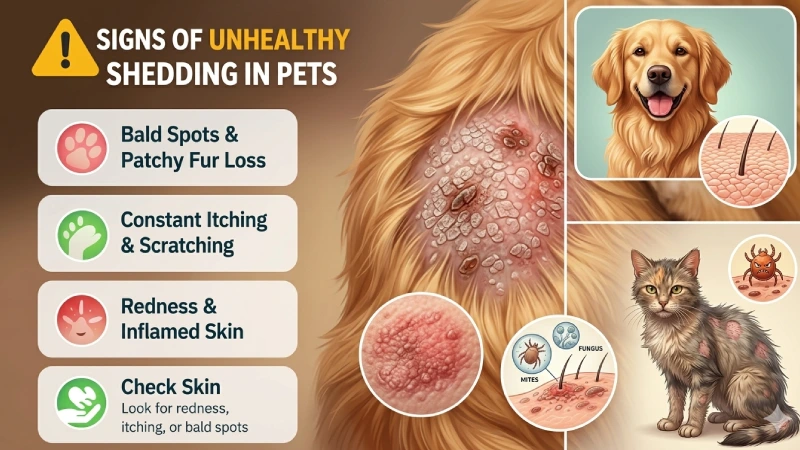
Not all shedding is harmless. Sometimes, it signals a problem.
Warning Signs
Watch for:
- Bald spots or patchy fur
- Excessive scratching
- Redness or rashes
- Dry, dull coat
- Sudden increase in shedding
👉 These signs may indicate a health issue.
Common Causes of Abnormal Shedding
1. Allergies
Pets can react to:
- Food
- Dust
- Pollen
This often causes itching and hair loss.
2. Parasites
Fleas, ticks, and mites can lead to:
- Skin irritation
- Hair loss
- Constant scratching
3. Poor Diet
Low-quality food can result in:
- Weak fur
- Increased shedding
- Lack of shine
4. Stress and Anxiety
Changes like moving homes or lack of attention can trigger shedding.
5. Skin Infections
Some infections or medical conditions may cause unusual hair loss.
👉 Always consult a vet if symptoms continue.
The Role of Environment and Weather
Climate Impact
- Warm climates → steady shedding
- Cold climates → seasonal shedding
Indoor Living Effects
Artificial lighting and AC can:
- Disrupt natural shedding cycles
- Cause year-round shedding
👉 This is normal for indoor pets.
Helpful Tips to Manage Shedding
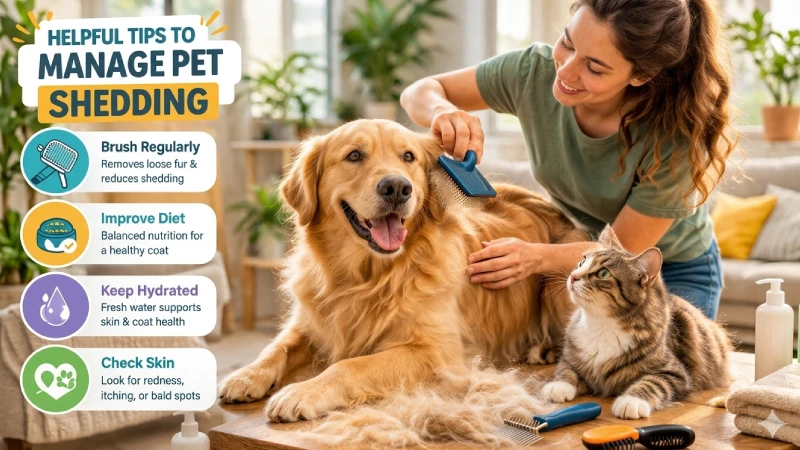
🟢 Brush Regularly
- Removes loose fur
- Keeps coat smooth
- Prevents tangles
🟢 Improve Diet
Provide:
- Balanced nutrition
- High-quality pet food
🟢 Keep Your Pet Hydrated
Water supports healthy skin and coat.
🟢 Maintain Hygiene
- Regular baths (not too often)
- Clean environment
🟢 Reduce Stress
- Follow a routine
- Spend quality time
Building a Simple Grooming Routine
Weekly Plan
2–3 times/week:
- Brush fur
- Check skin
Weekly:
- Clean bedding
Monthly:
- Bathe (if needed)
Choosing the Right Tools
- Slicker brush
- Deshedding tools
- Soft brushes
👉 Match tools to your pet’s coat.
Natural Ways to Improve Coat Health
Nutrition
A good diet improves:
- Coat shine
- Hair strength
- Skin condition
Hydration
Lack of water can cause dry skin and more shedding.
Sunlight & Activity
Outdoor time helps regulate natural cycles.
Managing Shedding at Home
Cleaning Tips
- Use lint rollers
- Vacuum regularly
- Wash bedding
Protect Furniture
Use:
- Covers
- Blankets
Seasonal Shedding: What to Expect
Spring
- Heavy shedding
- Loss of winter coat
Autumn
- Moderate shedding
- Coat adjustment
Reducing Stress-Related Shedding
Causes
- Noise
- Environment changes
- Lack of routine
Solutions
- Keep routine stable
- Provide comfort
- Give attention
Monitoring Your Pet’s Coat
Healthy Coat Signs
- Smooth and shiny
- No bald spots
- Even fur
Warning Signs
- Rapid hair loss
- Skin problems
- Constant scratching
👉 Take action early.
Common Mistakes to Avoid
❌ Ignoring Early Symptoms
Many pet owners ignore small signs like mild itching or slight hair loss. However, these can be early indicators of a health issue. Always monitor your pet closely and act early.
❌ Over-bathing Your Pets
Bathing your pet too frequently can remove natural oils from the skin. This can lead to dryness, irritation, and increased shedding. Always follow a proper bathing routine.
❌ Feeding a Poor diet
A low-quality diet can negatively affect your pet’s coat health. Without proper nutrition, pets may experience weak fur, dull coats, and excessive shedding.
❌ Skipping Regular Grooming
Not brushing your pet regularly allows loose hair to build up, making shedding worse. Regular grooming helps maintain a healthy coat and reduces hair fall.
❌ Delaying Veterinary Care
If shedding becomes unusual or is accompanied by skin issues, delaying a vet visit can worsen the condition. Early diagnosis helps prevent serious health problems.
When Should You See a Vet?
Consult a veterinarian if:
- Shedding is excessive
- Skin irritation appears
- Hair loss continues
- Your pet seems uncomfortable
Conclusion
Shedding is a natural part of your pet’s life, especially during seasonal changes. But understanding the difference between normal shedding and health-related issues is essential.
With proper care, grooming, and attention, you can keep your pet’s coat healthy and reduce unnecessary shedding.
At Earth Paw Pets, we believe that simple care and awareness can make a big difference in your pet’s happiness and well-being.
Disclaimer: The information provided in this blog post is for educational and informational purposes only and is not intended as a substitute for professional veterinary advice, diagnosis, or treatment. Always seek the guidance of your veterinarian with any questions you may have regarding your pet’s health or behavior. Never disregard professional veterinary advice or delay in seeking it because of something you have read here.
FAQ
A1: Yes, especially during seasonal changes.
A2: Bald spots, itching, redness, and sudden hair loss.
A3: Yes, poor diet leads to weak fur and more shedding.
A4: 2–3 times a week for most pets.
A5: Yes, stress can increase hair loss.
A6: If shedding is unusual or includes skin issues.