Introduction
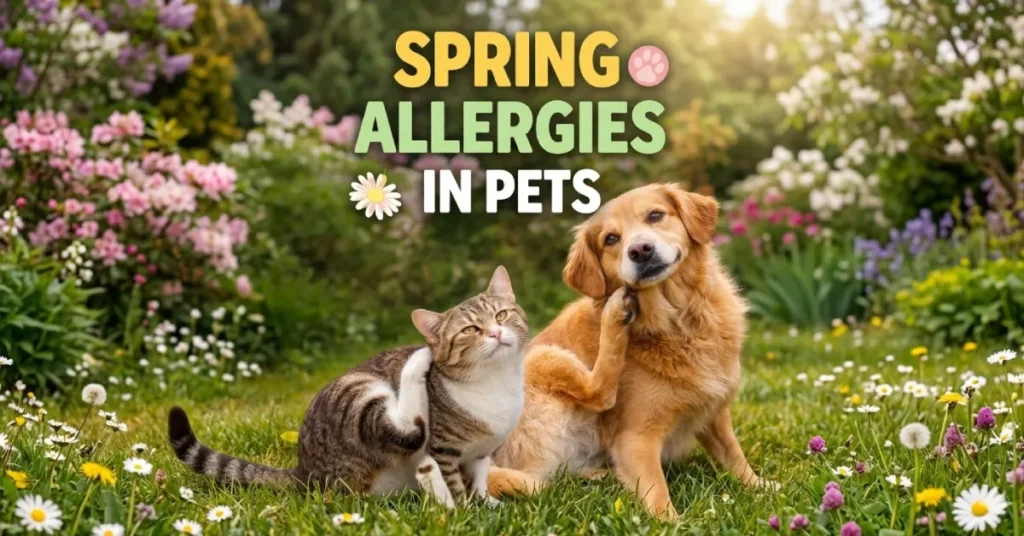
Spring is a refreshing season filled with blooming flowers, greenery, and longer days. But while we enjoy the beauty of spring, it can be a challenging time for our pets.
Many pet owners notice small changes during this season — like paw licking, sneezing, or watery eyes — but often ignore them. These signs may seem minor, but they can actually indicate spring allergies in pets.
The tricky part is that allergy symptoms in pets are often hidden or mistaken for normal behavior. If left unnoticed, these issues can become more serious over time.
In this guide from Earth Paw Pets, you’ll learn how to identify the hidden signs of spring allergies in pets, understand what causes them, and discover simple ways to protect your furry friend.
What Are Spring Allergies in Pets?
Spring allergies happen when your pet’s immune system reacts to environmental triggers such as pollen, dust, and grass.
These allergens are often invisible but can enter your pet’s body through:
- Breathing
- Skin contact
- Paws
When this happens, your pet’s body reacts, leading to various symptoms.
Why Spring is a High-Risk Season
Spring creates the perfect conditions for allergies because:
- Plants release large amounts of pollen
- Dust becomes more active
- Pets spend more time outdoors
👉 This combination increases exposure to allergens.
Hidden Allergy Signs Pet Owners Often Miss
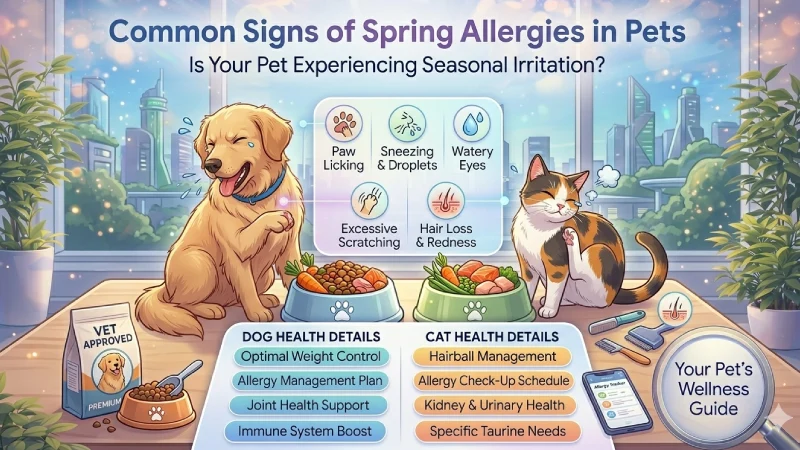
Not all allergy symptoms are obvious. Many pets show subtle signs that are easy to ignore.
🐾 Excessive Paw Licking
One of the most common hidden signs.
Pets lick their paws to relieve itching caused by allergens. If your pet is licking their paws more than usual, it could be a sign of irritation.
👀 Watery or Red Eyes
- Eyes may look teary or slightly red
- Clear discharge may appear
This is often caused by pollen or dust in the air.
🤧 Frequent Sneezing
Occasional sneezing is normal. However, repeated sneezing may indicate an allergic reaction.
👂 Ear Problems
- Scratching ears frequently
- Head shaking
- Bad odor
These symptoms often point to allergy-related ear issues.
🐕 Skin Irritation
- Red patches
- Dry skin
- Mild hair loss
👉 Skin problems are one of the most common effects of allergies.
Common Allergy Triggers
Understanding what causes allergies helps you prevent them.
🌿 Pollen
Pollen is the biggest trigger during spring.
- Comes from trees, flowers, and grass
- Easily sticks to your pet’s fur
🏠 Dust and Indoor Allergens
Even indoors, allergens exist:
- Dust mites
- Mold
These can affect pets even if they stay inside.
🌱 Grass
Direct contact with grass can cause:
- Skin irritation
- Paw allergies
How Allergies Affect Different Pets
Dogs
Dogs usually show:
- Paw licking
- Skin irritation
- Ear infections
Cats
Cats may show:
- Sneezing
- Watery eyes
- Excessive grooming
How to Prevent Spring Allergies in Pets
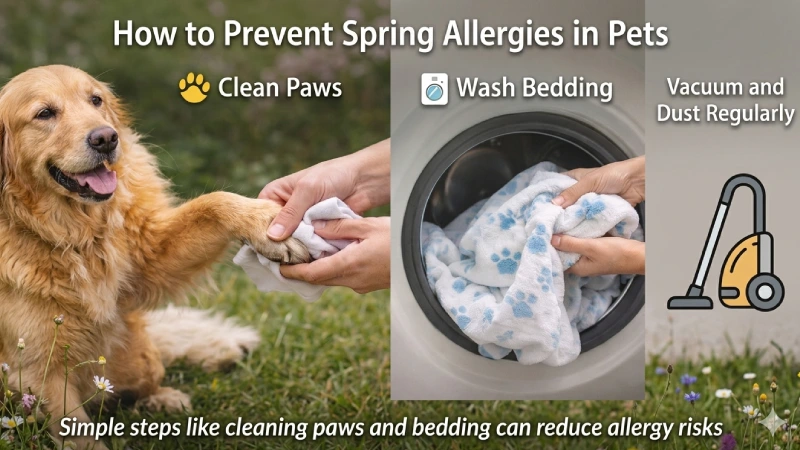
Prevention is the best way to protect your pet.
✅ Clean Your Pet’s Paws
After walks:
- Wipe paws with a clean cloth
- Remove pollen and dirt
✅ Wash Bedding Regularly
Pet bedding collects allergens quickly.
- Wash at least once a week
- Use mild detergent
✅ Keep Your Home Clean
- Vacuum regularly
- Reduce dust buildup
✅ Limit Outdoor Exposure
On high pollen days:
- Reduce outdoor activities
- Avoid grassy areas
✅ Regular Grooming
- Brush your pet’s fur
- Remove trapped allergens
Additional Care Tips for Allergy Season
Taking extra steps during spring can make a big difference.
🏡 Maintain Indoor Cleanliness
A clean home reduces allergens significantly.
- Clean floors regularly
- Use simple cleaning methods
- Keep pet areas tidy
🧴 Use Gentle Products
Avoid harsh cleaning products.
- Choose pet-safe options
- Avoid strong scents
🛏️ Create a Clean Resting Area
Your pet’s sleeping area should be:
- Clean
- Comfortable
- Free from dust
🌿 Wipe Your Pet After Outdoor Time
Use a clean towel to wipe:
- Fur
- Legs
- Belly
👉 This helps remove allergens before they spread inside.
Helpful Tips for Pet Owners
- Observe your pet daily
- Stick to a routine
- Provide fresh water
- Give balanced nutrition
How Diet Supports Allergy Prevention
A healthy diet plays an important role in reducing allergy symptoms.
🥗 Balanced Nutrition
Good nutrition supports:
- Skin health
- Coat strength
- Immune system
💧 Hydration
Water helps:
- Prevent dry skin
- Maintain coat health
Long-Term Allergy Management
Some pets experience allergies every spring.
What You Can Do:
- Track symptoms yearly
- Maintain regular cleaning
- Keep your pet’s environment healthy
- Consult a vet if needed
Monitoring Your Pet During Spring
Keep an eye on:
- Behavior changes
- Skin condition
- Eating habits
👉 Early detection helps prevent serious problems.
Creating an Allergy-Friendly Environment
- Keep floors clean
- Reduce dust
- Maintain airflow
- Clean pet bedding
Common Mistakes to Avoid
❌ Ignoring Mild Symptoms
Small signs can become serious if ignored.
❌ Not Cleaning Paws
Paws carry allergens inside your home.
❌ Poor Hygiene
Dirty environments increase exposure.
❌ Self-Diagnosing
Always seek professional advice when unsure.
❌ Delaying Veterinary Care
Waiting too long can worsen the problem.
When Should You See a Vet? ⚠️
Consult a veterinarian if:
- Symptoms continue for several days
- Skin becomes irritated or infected
- Your pet seems uncomfortable
- Symptoms get worse
Conclusion
Spring allergies in pets are common, but they are often overlooked. Hidden signs like paw licking, sneezing, watery eyes, and ear problems should never be ignored.
By understanding these symptoms and taking simple preventive steps, you can keep your pet comfortable and healthy throughout the season.
At Earth Paw Pets, we believe that awareness and daily care are the keys to a happy and healthy pet.
Disclaimer: The information provided in this blog post is for educational and informational purposes only and is not intended as a substitute for professional veterinary advice, diagnosis, or treatment. Always seek the guidance of your veterinarian with any questions you may have regarding your pet’s health or behavior. Never disregard professional veterinary advice or delay in seeking it because of something you have read here.
FAQ
A1. Paw licking, sneezing, watery eyes, and ear issues.
A2. Pollen, dust, and grass.
A3. Clean paws, wash bedding, and maintain hygiene.
A4. Yes, especially during spring.
A5. If symptoms persist or worsen.
A6. Yes, a balanced diet supports overall health.