Introduction
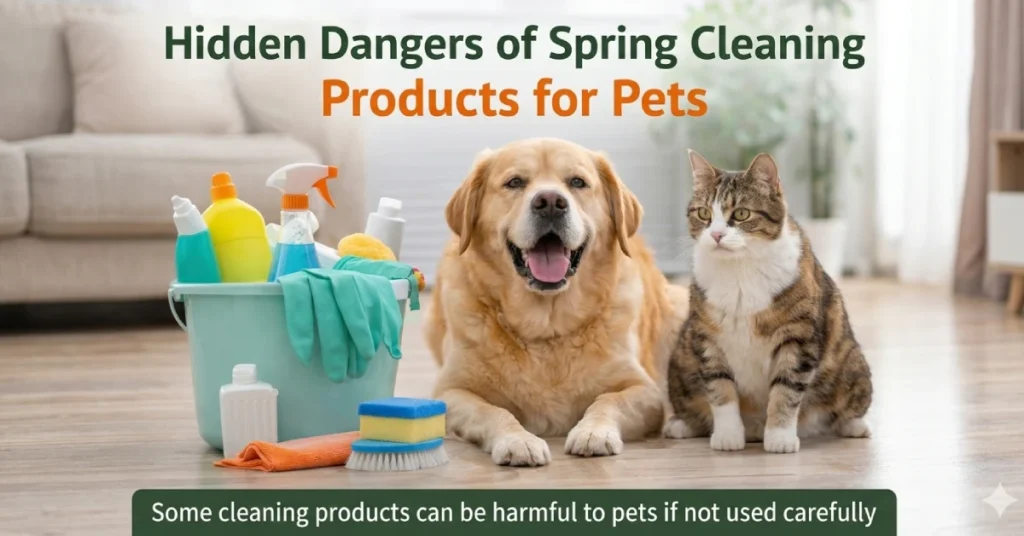
Spring cleaning is something many people look forward to. It’s the perfect time to refresh your home, remove dust, and create a cleaner, healthier living space. You might open windows, wash surfaces, and use strong cleaning products to eliminate germs and odors.
But while your home may look spotless, there’s a hidden risk many pet owners overlook — cleaning products can be harmful to pets.
Dogs and cats live very close to the ground. They walk on floors, lie on carpets, and often lick their paws or surfaces. This behavior makes them more exposed to chemical residues compared to humans.
Even products that seem safe for humans can irritate your pet’s skin, harm their breathing, or cause stomach problems if ingested. The danger is not always immediate — sometimes it builds up slowly over time.
The good news is that you don’t have to stop cleaning. You just need to clean in a smarter, safer way.
In this complete guide from Earth Paw Pets, you’ll learn about the hidden dangers of spring cleaning products, how pets are exposed, what chemicals to avoid, and practical ways to keep your home clean without risking your pet’s health.
Why Cleaning Products Can Be Dangerous for Pets
Cleaning products are designed to remove bacteria, stains, and dirt. To do this effectively, they often contain strong chemical ingredients.
How Pets Get Exposed
Pets can come into contact with cleaning products in multiple ways:
- Walking on freshly cleaned floors
- Licking surfaces or spilled liquids
- Breathing in strong chemical fumes
- Grooming themselves after contact
👉 Even a small amount of exposure can affect pets over time.
Why Pets Are More Sensitive
- They are closer to floors and surfaces
- They explore using their mouth
- Their body size is smaller
- Their immune system may react differently
👉 This makes them more vulnerable than humans.
Common Harmful Ingredients in Cleaning Products ⚠️
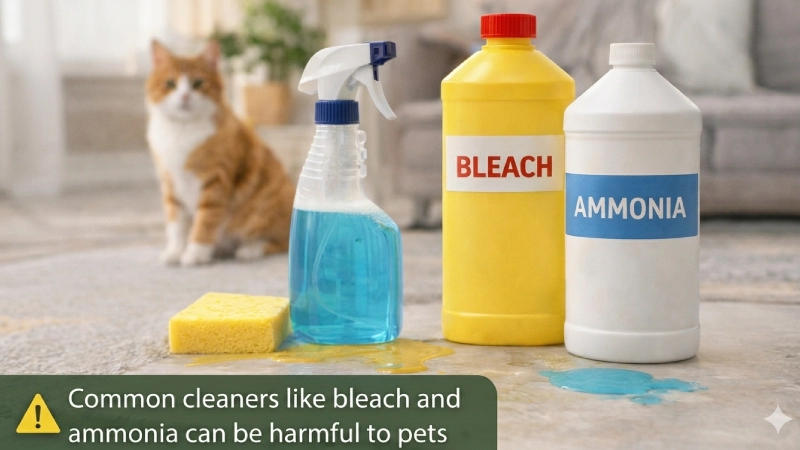
Many everyday cleaning products contain ingredients that can be risky for pets.
🧪 Bleach
Bleach is commonly used for disinfecting surfaces.
Possible effects:
- Skin irritation
- Eye discomfort
- Breathing problems
🧪 Ammonia
Often found in glass cleaners and floor solutions.
Possible effects:
- Strong fumes
- Respiratory irritation
- Eye irritation
🧪 Phenols
Used in some disinfectants.
Possible effects:
- Toxic when ingested
- Particularly harmful for cats
🧪 Artificial Fragrances
These are added to create a fresh smell.
Possible effects:
- Allergic reactions
- Sneezing or coughing
- Skin sensitivity
Less Obvious Hidden Dangers
Some risks are not immediately visible.
🧴 Residue Build-Up
Even after cleaning, chemicals can remain on surfaces.
- Floors
- Furniture
- Pet bedding
👉 Pets may absorb or ingest this residue over time.
🌫️ Airborne Chemicals
Sprays and cleaners release tiny particles into the air.
- Pets inhale these particles
- Can affect breathing
🧽 Cleaning Tools
Sponges, cloths, and mops can hold chemicals.
- Pets may come into contact with them
- Residue can spread to other areas
Signs Your Pet May Be Affected
Recognizing symptoms early is very important.
Common Warning Signs
- Excessive licking of paws
- Sneezing or coughing
- Watery or irritated eyes
- Red or itchy skin
- Low energy or unusual behavior
👉 If symptoms continue, consult a veterinarian.
How Pets Interact with Cleaning Chemicals
Paw Contact
Pets walk on floors and then:
- Lick their paws
- Transfer chemicals into their body
Fur Absorption
Chemicals can stick to fur and skin.
Direct Contact
Pets may accidentally touch or lick cleaning solutions.
Safe Alternatives to Toxic Cleaning Products
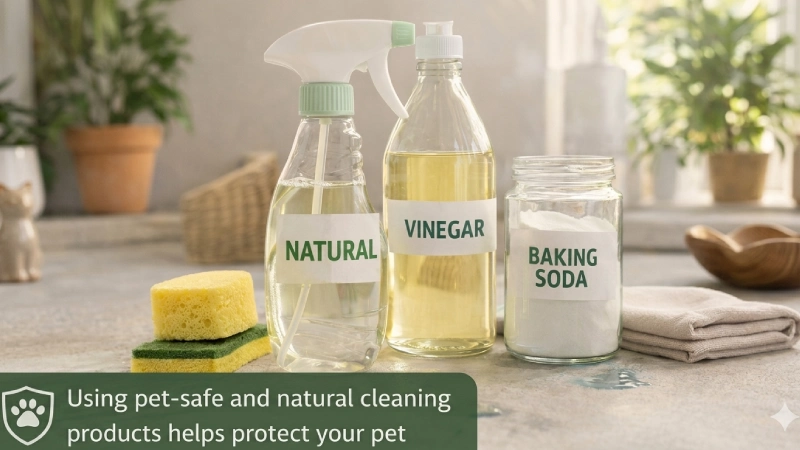
✅ Pet-Safe Commercial Cleaners
Look for:
- Non-toxic labels
- Pet-safe certification
- Mild ingredients
✅ Natural Cleaning Options
- Mild soap
- Baking soda for odor removal
- Diluted vinegar (used carefully)
👉 Always use natural products properly and avoid overuse.
Safe Cleaning Practices for Pet Owners
🧼 Clean in Stages
- Clean one area at a time
- Keep pets away from wet surfaces
💨 Improve Ventilation
- Open windows
- Use fans
🧽 Rinse and Dry Surfaces
- Remove chemical residue
- Ensure floors are dry before pets return
🐾 Clean Your Pet’s Paws
After cleaning:
- Gently wipe paws
- Reduce chemical ingestion
Room-by-Room Pet Safety Guide
🏠 Living Room
- Avoid strong sprays
- Clean gently
🍽️ Kitchen
- Keep cleaning products away from food areas
- Avoid spraying near pet bowls
🛁 Bathroom
- Use minimal harsh cleaners
- Keep doors closed after cleaning
🛏️ Bedroom
- Avoid strong fragrances
- Wash bedding regularly
Special Considerations for Different Pets
Dogs
- More likely to walk on wet surfaces
- May lick floors or objects
Cats
- Groom frequently
- More sensitive to toxins
Long-Term Effects of Exposure
Repeated exposure to harmful chemicals can lead to:
- Skin irritation
- Breathing problems
- Reduced energy
- Behavioral changes
👉 Long-term safety should always be a priority.
Building a Pet-Safe Cleaning Routine
Step 1: Choose Safer Products
Avoid harsh chemicals.
Step 2: Set a Cleaning Schedule
Clean when pets are not present.
Step 3: Allow Drying Time
Never let pets walk on wet floors.
Step 4: Monitor Your Pet
Watch for any unusual reactions.
Helpful Tips for Pet Owners
- Read labels carefully
- Store cleaning products safely
- Use minimal amounts
- Clean regularly but gently
Common Mistakes to Avoid
❌ Using Too Much Product
More is not always better.
❌ Not Rinsing Surfaces
Residue can remain.
❌ Ignoring Pet Behavior
Changes may indicate a problem.
❌ Mixing Cleaning Products
Can create dangerous fumes.
When Should You See a Vet? ⚠️
Consult a veterinarian if:
- Your pet shows persistent symptoms
- There is accidental ingestion
- Breathing issues occur
- Behavior changes suddenly
Creating a Healthy Home Environment
Balance Cleanliness and Safety
- Clean regularly
- Avoid overuse of chemicals
Keep Your Pet Comfortable
- Provide clean resting areas
- Maintain fresh air
Stay Aware
- Observe your pet daily
- Adjust habits when needed
Extra Preventive Measures
Safe Storage
- Keep products out of reach
- Use secure cabinets
Label Awareness
- Understand ingredients
- Avoid risky chemicals
Routine Checks
- Inspect cleaning tools
- Replace contaminated items
Conclusion
Spring cleaning is essential, but it should never come at the cost of your pet’s safety. Many cleaning products contain hidden chemicals that can harm your pet through contact, inhalation, or ingestion.
By choosing safer alternatives, using proper cleaning methods, and staying aware of your pet’s behavior, you can maintain a clean and healthy home environment.
A truly clean home is one where every member — including your pet — feels safe and comfortable.
At Earth Paw Pets, we believe that smart, mindful care leads to a healthier and happier life for your pets.
Disclaimer: The information provided in this blog post is for educational and informational purposes only and is not intended as a substitute for professional veterinary advice, diagnosis, or treatment. Always seek the guidance of your veterinarian with any questions you may have regarding your pet’s health or behavior. Never disregard professional veterinary advice or delay in seeking it because of something you have read here.
FAQ
A1: Yes, some contain harmful chemicals.
A2: Bleach, ammonia, and strong fragrances.
A3: Through contact, licking, and inhalation.
A4: Yes, but use them safely.
A5: Sneezing, licking, irritation, or low energy.
A6: Use pet-safe products and ensure proper ventilation.