

It’s a scene every dog owner knows well. One moment your pup is happily sniffing the backyard, and the next, they’re munching on a mouthful of grass like it’s a gourmet salad. You watch, half amused and half concerned, wondering: “Why is my dog eating grass? Is he sick? Does he need more vegetables? Am I a bad pet parent?”
First, take a deep breath. Grass eating is one of the most common and often misunderstood behaviors in dogs. For generations, myths have swirled around this habit, leaving owners confused and sometimes worried. The truth is, most of the time, a dog nibbling on grass is perfectly normal. But let’s dig into the real reasons behind this behavior, separate fact from fiction, and learn when a trip to the vet might actually be necessary.
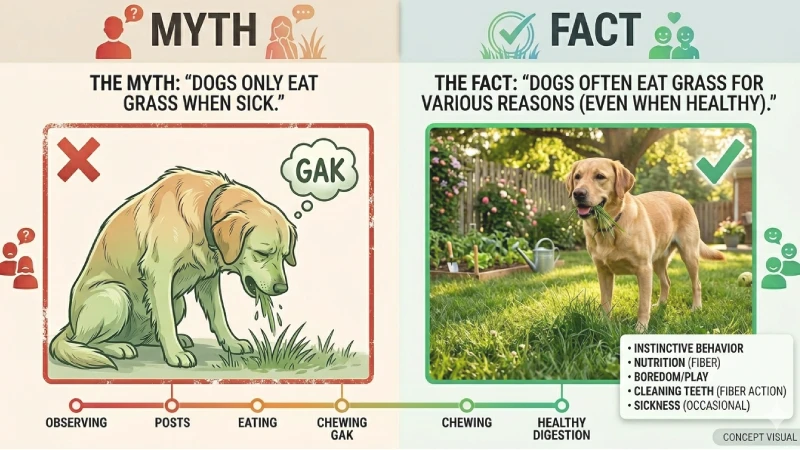
Myth #1: Dogs Eat Grass Only When They’re Sick
This is the most persistent myth: dogs instinctively eat grass to make themselves vomit when they have an upset stomach. While it’s true that some dogs do vomit after eating grass, research suggests that’s not the primary reason most dogs do it.
A large-scale survey of dog owners found that fewer than 10% of dogs showed signs of illness before eating grass, and only about 25% vomited afterward. The majority of grass-eating dogs appeared perfectly healthy before and after their snack. So while grass can induce vomiting in some dogs, it’s not a reliable sign that your dog is feeling unwell.
If your dog regularly eats grass and then vomits, or shows other signs of illness like lethargy, diarrhea, or loss of appetite, that’s worth a vet visit. But occasional grass grazing without any other symptoms is generally nothing to worry about.
Myth #2: Dogs Eat Grass Because Their Diet Is Missing Something
Another common belief is that grass eating signals a nutritional deficiency—that your dog is craving something missing from their food. While it’s a logical theory, it’s not strongly supported by evidence. Most dogs eating commercial diets that are complete and balanced still graze on grass. In fact, even dogs fed raw or homemade diets with plenty of plant matter often continue the habit.
What is possible is that dogs enjoy the texture, taste, or simply the act of chewing on grass. Some dogs may be drawn to fresh new spring grass because it’s tender and palatable. Think of it less as a nutrient-seeking mission and more like a human craving a crisp, refreshing snack.
So Why Do Dogs Really Eat Grass? Let’s Look at the Facts
Now that we’ve cleared up the myths, let’s explore the actual, science-backed reasons dogs eat grass. You might find that your dog’s behavior fits into one or more of these categories.
It’s in Their Evolutionary Roots
Wild canids, including wolves and foxes, often consume plant matter from the stomachs of their prey. But they also graze on grasses and berries directly. Studies of wild wolf scat show that up to 30% of their diet can include plant material. So, eating grass is actually an ancestral behavior, not a modern anomaly. Your pampered pooch is simply tapping into an ancient instinct.
Boredom or Lack of Enrichment
Dogs are intelligent, active animals. When they don’t get enough mental stimulation or physical exercise, they find their own entertainment—and that sometimes means nibbling on the lawn. A dog left alone in a fenced yard for hours may turn to grass out of sheer boredom. In this case, the behavior is a subtle cry for more interaction, play, or exercise.
They Simply Like the Taste and Texture
Sometimes the simplest answer is the right one. Grass is readily available, has a satisfying crunch, and may even taste appealing to some dogs. Young, tender grass shoots are especially tempting. For some dogs, grass eating becomes a habit simply because they enjoy it.
A Way to Relieve Digestive Discomfort (Sometimes)
While not the primary cause, some dogs do turn to grass when they feel mildly nauseous. The fibrous texture can help trigger vomiting, which may relieve stomach upset. If you notice your dog frantically eating large amounts of grass and then immediately vomiting, it could be a response to indigestion. But again, this is not the norm for most casual grazers.
When Should You Worry About Grass Eating?
In most cases, grass grazing is harmless. However, there are situations where you should pay closer attention or seek veterinary advice.
Potential Dangers to Watch For
- Pesticides, Herbicides, or Fertilizers: If your lawn or a public area has been treated with chemicals, ingested grass can be toxic. Always supervise your dog’s grazing and keep them away from treated areas.
- Parasites: Grass can harbor worm eggs or be contaminated by feces from other animals. Regular deworming and parasite prevention are essential.
- Sharp or Dangerous Plants: Not all plants are safe. Some common garden plants (like certain lilies, sago palm, etc.) are toxic. Know what’s growing in your yard.
- Frequent Vomiting: If your dog is regularly eating grass and throwing up, or shows signs of lethargy, weight loss, or changes in appetite, it’s time to see the vet.
- Obsessive Eating: If your dog eats grass compulsively—ignoring toys, food, or interaction—it could signal anxiety or underlying medical issues.
How to Manage Your Dog’s Grass Eating Habit
If your dog’s grass eating is occasional and doesn’t cause problems, you can simply accept it as a quirky canine behavior. But if you’re concerned or want to reduce it, here are some gentle strategies.
Enrich Their Environment
A tired dog is less likely to graze out of boredom. Ensure your dog gets adequate exercise, playtime, and mental stimulation. Puzzle toys, sniffing walks, and training sessions can redirect their focus.
Offer Safe Alternatives
If your dog seems to crave greens, offer safe, dog-friendly vegetables like cucumber slices, steamed green beans, or a small amount of plain, cooked pumpkin. This can satisfy the urge to chew on something plant-like without the risks of grass.
Maintain a Safe Lawn
If you have your own yard, avoid using chemical treatments. Consider creating a small “dog-safe” area with clean grass or even a patch of wheatgrass specifically for your dog to nibble. Wheatgrass is safe and often enjoyed by dogs.
Rule Out Medical Causes
If your dog’s grass eating is new, excessive, or accompanied by other symptoms, a veterinary checkup can rule out underlying issues like gastrointestinal disorders, parasites, or dietary sensitivities.
Final Thoughts: Embrace the Quirk, but Stay Aware
Watching your dog munch on grass can feel puzzling, but it’s usually just another one of their harmless, endearing quirks. By understanding the truths behind the myths, you can relax and appreciate that your canine companion is simply being a dog. Provide a safe environment, plenty of enrichment, and pay attention to any changes in their overall health.
The next time your dog pauses on a walk to sample the lawn, you’ll know it’s likely not a sign of illness, but rather a connection to their wild ancestors—or maybe just because they like the way it tastes.
Disclaimer: The information provided in this blog post is for educational and informational purposes only and is not intended as a substitute for professional veterinary advice, diagnosis, or treatment. Always seek the guidance of your veterinarian with any questions you may have regarding your pet’s health or behavior. Never disregard professional veterinary advice or delay in seeking it because of something you have read here.
FAQ
A1: Yes, daily grass eating is usually normal and harmless if your dog is healthy and not vomiting.
A2: Not directly. Grass eating itself isn’t a sign of worms, but grass can carry parasites. Regular deworming is recommended.
A3: Rarely. Small amounts pass through easily. Large clumps of long grass may cause issues in some dogs.
A4: No, unless the grass is chemically treated or your dog eats it obsessively. Offer safe alternatives like green beans.
A5: Monitor them. If it’s once and they act fine, no worry. If frequent or with other symptoms, call your vet.