Introduction
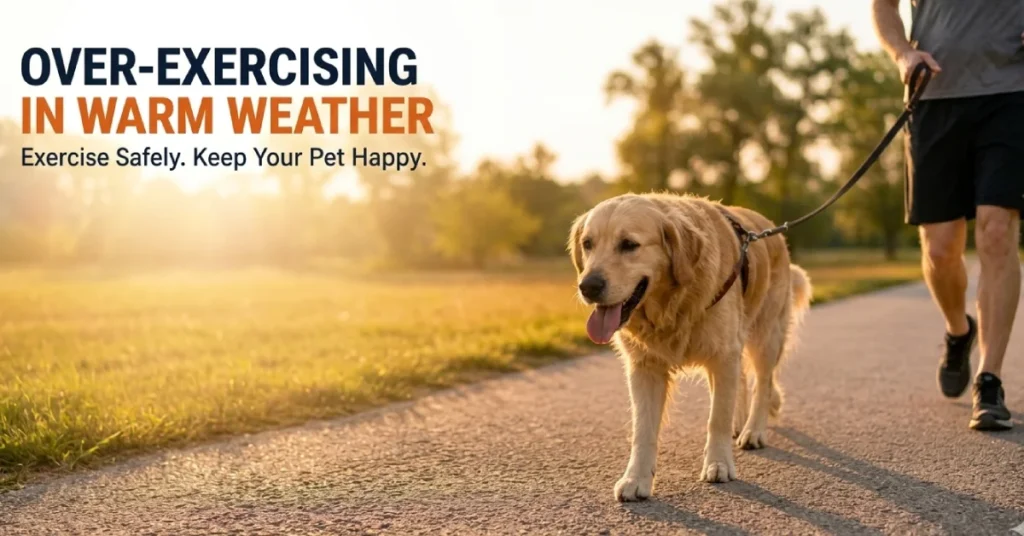
Exercise is one of the most important parts of keeping your pet healthy. It helps maintain a healthy weight, improves mood, and strengthens the bond between you and your pet. But when the temperature rises, exercise can quickly become risky if not managed properly.
Many pet owners follow the same routine throughout the year without adjusting for weather changes. A walk that feels normal on a cool day can become dangerous during warm weather.
The truth is simple — over-exercising in warm weather can lead to heat exhaustion, dehydration, and serious health problems.
Pets cannot regulate body heat as efficiently as humans. Dogs cool themselves mainly through panting, while cats tend to hide discomfort until it becomes serious. This makes them more vulnerable to overheating during physical activity.
The good news is that you don’t have to stop exercising your pet. You just need to adjust how, when, and where you do it.
In this complete guide from Earth Paw Pets, you will learn the risks of over-exercising, how to recognize warning signs, and safe ways to keep your pet active even in warm weather.
Why Over-Exercising in Warm Weather Is Dangerous
🌡️ Rapid Increase in Body Heat
Exercise naturally raises your pet’s body temperature. In warm weather:
- Heat builds up faster
- Cooling becomes difficult
- Recovery takes longer
🐾 Limited Cooling Mechanism
Unlike humans, pets cannot sweat efficiently.
- Dogs rely on panting
- Cats have minimal sweat glands
👉 This makes it harder for them to cool down during activity.
☀️ Environmental Factors
Hot weather adds extra stress:
- Direct sunlight increases heat exposure
- Hot surfaces raise body temperature
- Humidity makes cooling less effective
👉 All these factors together increase the risk of overheating.
Risks of Too Much Exercise in Warm Weather ⚠️
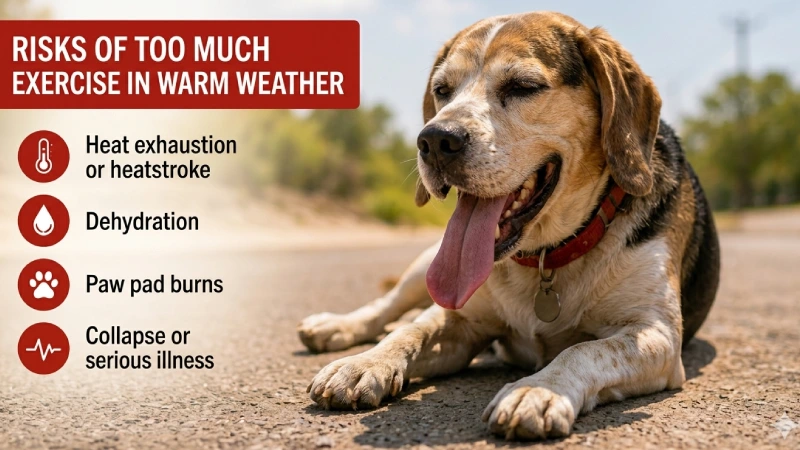
🐶 Heat Exhaustion
A common condition caused by over-exertion.
- Heavy panting
- Fatigue
- Reduced movement
🌡️ Heatstroke
A serious and potentially life-threatening condition.
- Extremely high body temperature
- Loss of coordination
- Collapse
💧 Dehydration
Exercise leads to fluid loss.
- Causes weakness
- Reduces energy
🐾 Paw Pad Burns
Hot pavement or sand can:
- Burn paws
- Cause pain and injury
Signs Your Pet Is Over-Exercised
🐾 Early Warning Signs
- Panting heavily
- Slowing down
- Seeking shade
- Lying down frequently
⚠️ Advanced Signs
- Drooling excessively
- Vomiting
- Weakness
- Difficulty walking
- Collapse
👉 Immediate action is required if these signs appear.
Safe Exercise Tips for Warm Weather
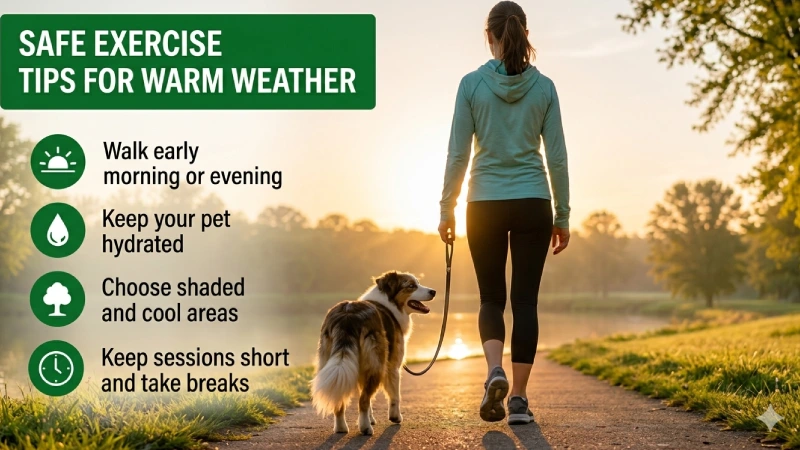
✅Walk Early Morning or Evening
This is the safest and most effective solution.
- Cooler temperature
- Less sun exposure
✅Keep Exercise Sessions Short
- Avoid long walks
- Take frequent breaks
✅Provide Fresh Water
- Before activity
- During activity
- After activity
✅Choose Safe Surfaces
- Grass instead of pavement
- Shaded paths
✅Observe Your Pet Closely
- Stop immediately if signs of fatigue appear
Adjusting Exercise Based on Temperature
🌞 Hot Days
- Reduce intensity
- Keep sessions very short
🌤️ Moderate Days
- Moderate activity is safe
🌧️ Cooler Days
- Normal exercise routine
👉 Always adapt based on weather conditions.
Indoor Exercise Alternatives
🏠 Interactive Games
- Fetch
- Tug-of-war
- Puzzle toys
🧠 Mental Stimulation
- Training sessions
- Problem-solving toys
👉 These keep your pet active without heat risk.
Hydration and Nutrition During Exercise
💧 Hydration Strategy
- Offer small amounts frequently
- Avoid large intake at once
🍽️ Feeding Timing
- Avoid feeding right before exercise
- Allow time for digestion
👉 Proper timing reduces stress on the body.
Special Care for Different Pets
🐕 Dogs
- More likely to over-exercise
- Show visible signs early
🐈 Cats
- Exercise less intensely
- Hide discomfort
👉 Careful monitoring is essential.
High-Risk Pets ⚠️
Some pets are more sensitive to heat and require extra attention.
🐾 At-Risk Groups
- Senior pets
- Overweight pets
- Thick-coated breeds
- Pets with health conditions
👉 These pets should have reduced activity levels.
Common Mistakes to Avoid
❌ Exercising During Midday Heat
This is the hottest and most dangerous time.
❌ Ignoring Early Warning Signs
Small signs can become serious quickly.
❌ No Access to Water
Increases dehydration risk.
❌ Walking on Hot Surfaces
Can burn paws.
❌ Overestimating Your Pet’s Strength
Pets may push themselves too far.
How to Check If It’s Too Hot for Exercise
🖐️ Pavement Test
Place your hand on the ground:
- If too hot for your hand → too hot for paws
🌡️ Observe Weather
- High humidity increases risk
- Strong sunlight adds stress
👉 Simple checks can prevent injuries.
Creating a Safe Exercise Routine
🕒 Set a Consistent Schedule
- Early morning
- Evening
📊 Monitor Your Pet’s Response
- Adjust based on energy levels
🔄 Stay Flexible
- Reduce or skip exercise on very hot days
👉 Safety should always come before routine.
Emergency Steps If Your Pet Overheats
🚨 Immediate Actions
- Move your pet to a cool, shaded area
- Offer small amounts of water
- Use cool (not cold) water on the body
- Allow rest
⚠️ Important Notes
- Avoid ice-cold water
- Do not force water
📞 Seek Veterinary Help
- If symptoms do not improve
- If your pet collapses
Long-Term Benefits of Safe Exercise
🐾 Physical Health
- Maintains healthy weight
- Improves fitness
🧠 Mental Health
- Reduces boredom
- Prevents anxiety
❤️ Stronger Bond
- Builds trust and connection
👉 Safe exercise supports overall well-being.
Extra Tips for Pet Owners
💡Plan Ahead
- Check weather forecast
- Prepare water and supplies
💡Keep Emergency Contacts
- Vet clinic number
- Nearby emergency services
💡Stay Alert
- Watch behavior closely
- Act quickly if needed
👉 Prevention is always better than treatment.
Conclusion
Exercise is essential for your pet’s health, but over-exercising in warm weather can be dangerous if not managed carefully.
The key is balance — providing enough activity while protecting your pet from heat-related risks.
Simple changes like walking early in the morning or evening, providing water, and watching for warning signs can make a big difference.
Always remember — your pet relies on you to keep them safe.
At Earth Paw Pets, we believe that safe habits create healthy, happy lives for pets.
Disclaimer: The information provided in this blog post is for educational and informational purposes only and is not intended as a substitute for professional veterinary advice, diagnosis, or treatment. Always seek the guidance of your veterinarian with any questions you may have regarding your pet’s health or behavior. Never disregard professional veterinary advice or delay in seeking it because of something you have read here.
FAQ
A1: Yes, with proper precautions.
A2: Early morning or evening.
A3: Panting, weakness, and slowing down.
A4: Yes, especially in hot weather.
A5: Short sessions, water, and shade.
A6: Move them to shade and offer water immediately.