Introduction
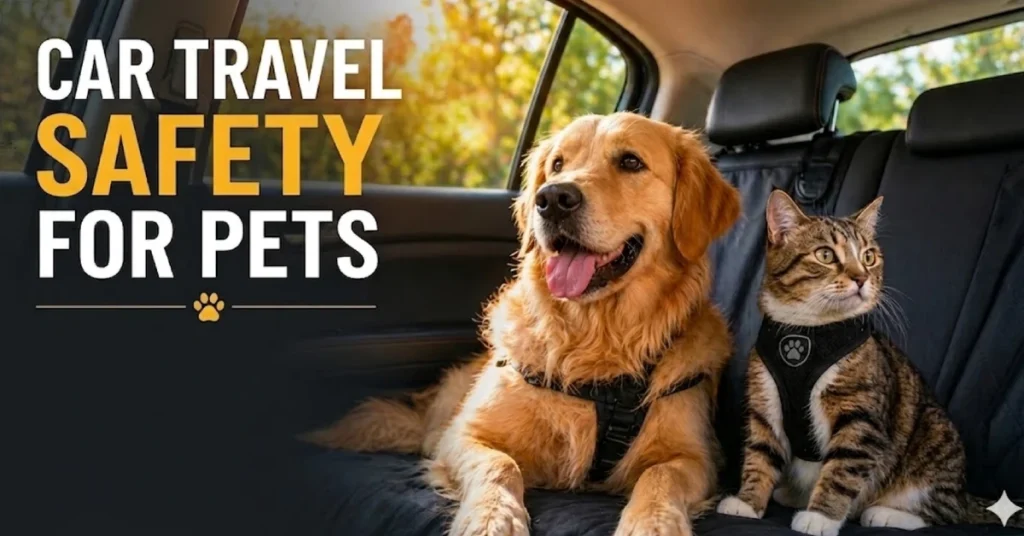
Traveling with your pet can be one of the most enjoyable experiences. Whether you are going for a short drive, visiting family, or planning a longer trip, having your pet by your side makes the journey more special.
However, when temperatures start rising, car travel can quickly become dangerous for pets.
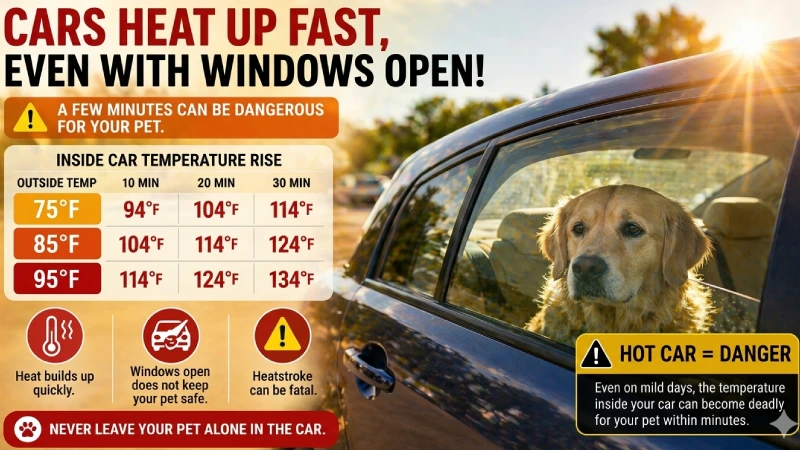
Many pet owners don’t realize how fast the temperature inside a vehicle can increase. Even when the weather feels comfortable outside, the inside of a parked car can become extremely hot within minutes.
The Point is simple — cars heat up faster than you think, and pets are highly vulnerable to this heat.
Unlike humans, pets cannot cool themselves efficiently. Dogs mainly rely on panting, and cats have very limited ways to regulate their body temperature. This makes them more sensitive to heat and more likely to suffer from heat stress.
Even leaving your pet alone in the car for a short time can lead to serious health risks.
The good news is that with proper awareness and simple precautions, you can ensure safe and comfortable car travel for your pet.
In this complete guide from Earth Paw Pets, you will learn why cars become dangerous in warm weather, the risks involved, how to prevent them, and what to do if your pet shows signs of overheating.
Why Cars Become Extremely Hot in Warm Weather
🌡️ Greenhouse Effect Inside Cars
Cars trap heat very effectively.
- Sunlight enters through windows
- Heat gets trapped inside
- Temperature rises rapidly
👉 This creates a greenhouse-like effect.
⏱️ Rapid Temperature Increase
Within just a few minutes:
- Interior temperature can rise significantly
- Air becomes hot and uncomfortable
- Oxygen flow feels reduced
👉 This happens even on moderately warm days.
🚗 Poor Air Circulation
Even with windows slightly open:
- Airflow is limited
- Heat continues to build
👉 Open windows do not provide enough cooling.
☀️ Direct Sunlight Exposure
Sunlight increases:
- Surface temperature (seats, dashboard)
- Air temperature inside
Why Pets Are More Vulnerable to Heat
🐾 Limited Cooling Ability
Pets cannot sweat like humans.
- Dogs cool down by panting
- Cats rely on minimal sweating
🌡️ Faster Overheating
Their body temperature rises quickly.
🧠 Instinct Over Safety
Pets may:
- Stay in hot areas
- Not move away from danger
👉 They depend on owners for safety.
Major Risks of Car Travel in Warm Weather ⚠️
🐶 Heat Stress and Heatstroke
This is the most serious risk.
- Body temperature rises
- Panting increases
- Can become life-threatening
💧 Dehydration
Heat causes:
- Fluid loss
- Weakness
😰 Stress and Anxiety
Pets may feel:
- Trapped
- Uncomfortable
- Panicked
⚠️ Severe Health Complications
If ignored:
- Organ stress
- Collapse
Signs Your Pet Is Overheating
🐾 Early Signs
- Heavy panting
- Drooling
- Restlessness
⚠️ Advanced Signs
- Weakness
- Vomiting
- Difficulty standing
- Collapse
👉 Immediate action is required.
Safe Car Travel Tips for Pets
✅Never Leave Your Pet Alone in the Car
This is the golden rule.
👉 Even 5 minutes can be dangerous.
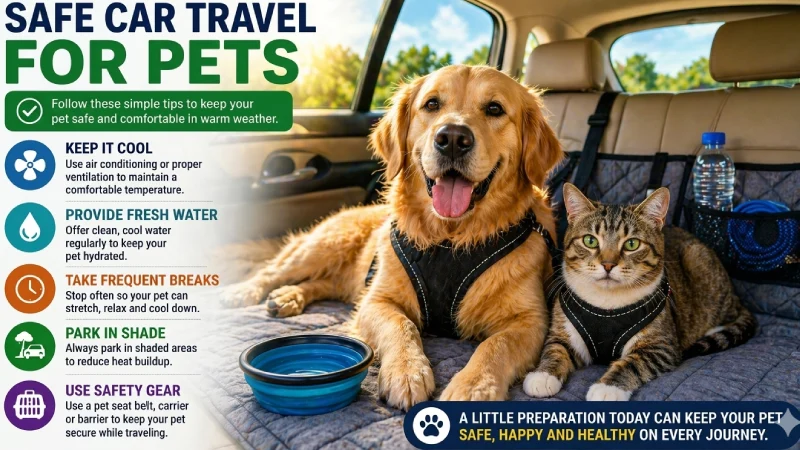
✅Always Use Air Conditioning
- Maintain a cool temperature
- Ensure airflow
✅Travel During Cooler Times
- Early morning
- Late evening
✅Keep Fresh Water Available
- Offer water regularly
- Prevent dehydration
✅Take Frequent Breaks
- Let your pet rest
- Allow cooling time
✅Use Sun Protection
- Window shades
- Park in shaded areas
Preparing Your Car for Pet Travel
🚗 Check Vehicle Condition
- Air conditioning working properly
- Windows functioning
🧊 Carry Essential Supplies
- Water
- Bowl
- Towel
- Cooling mat
🪑 Comfortable Setup
- Enough space for your pet
- Avoid overcrowding
What To Do If Your Pet Shows Heat Stress in a Car
🚨 Immediate Steps
- Stop the vehicle safely
- Move your pet to a cool or shaded area
- Offer clean water
- Use cool (not cold) water to lower temperature
- Allow your pet to rest
⚠️ Important Warning
- Do not use ice-cold water
- Avoid sudden temperature changes
When to Seek Veterinary Help ⚠️
Contact a veterinarian if:
- Symptoms continue
- Your pet collapses
- Vomiting occurs
- Behavior becomes unusual
Special Considerations for Different Pets
🐕 Dogs
- More active
- Show visible signs quickly
🐈 Cats
- May hide symptoms
- Become quiet when stressed
👉 Careful observation is important.
Traveling Long Distances with Pets
Plan Ahead
- Choose pet-friendly stops
- Avoid hot routes
Maintain Routine
- Feed at regular times
- Allow rest breaks
Monitor Constantly
- Check your pet frequently
Indoor Car Safety When Parked
🚫 Never Leave Pet Inside Alone
Even with:
- Windows open
- Shade
👉 Still dangerous.
🌳 Park Smart
- Choose shaded areas
- Reduce heat exposure
Common Mistakes to Avoid
❌ Leaving Pets “Just for a Minute”
Temperature rises quickly.
❌ Relying on Open Windows
Not effective for cooling.
❌ Ignoring Early Signs
Can lead to serious conditions.
❌ Traveling Without Preparation
Increases risk significantly.
Helpful Tips for Pet Owners
- Always plan your trip
- Carry emergency supplies
- Keep vet contact ready
- Stay alert to behavior changes
Emergency Preparedness
🧰 Be Ready
- Know signs of overheating
- Have a response plan
📞 Keep Emergency Contacts
- Veterinarian number
- Nearby clinics
Building Safe Travel Habits
Consistency Is Key
- Follow safety rules every time
Stay Aware
- Monitor weather
- Adjust plans accordingly
Long-Term Health Considerations
Repeated exposure to heat can lead to:
- Reduced tolerance to heat
- Increased health risks
Conclusion
Car travel during warm weather can pose serious risks to pets if proper precautions are not taken. The temperature inside a car can rise quickly, creating a dangerous environment even in a short time.
The most important rule is simple — never leave your pet alone in a car.
By ensuring proper ventilation, providing water, and planning your trips wisely, you can protect your pet from heat-related dangers.
A little preparation can make a big difference in keeping your pet safe and comfortable.
At Earth Paw Pets, we believe that safe travel leads to happy, healthy pets.
Disclaimer: The information provided in this blog post is for educational and informational purposes only and is not intended as a substitute for professional veterinary advice, diagnosis, or treatment. Always seek the guidance of your veterinarian with any questions you may have regarding your pet’s health or behavior. Never disregard professional veterinary advice or delay in seeking it because of something you have read here.
FAQ
1. Is it safe to leave pets in a car?
No, it can be dangerous even for a short time.
2. How fast does a car heat up?
Very quickly, within minutes.
3. Do open windows help?
No, they do not provide enough cooling.
4. What are early signs of overheating?
Panting, drooling, and restlessness.
5. How can I keep my pet safe?
Use AC, provide water, and never leave them alone.
6. When should I call a vet?
If symptoms are severe or do not improve.