
Introduction
Keeping your pet hydrated may seem simple, but many pet owners unknowingly follow habits that are not actually helpful. Giving water is important, but how you provide it matters just as much.
There are many common beliefs about pet hydration — like giving ice-cold water to cool them down or forcing them to drink when they seem inactive. While these actions may come from good intentions, they can sometimes cause discomfort or even health issues.
The reality is that pets have their own natural drinking patterns, and understanding those patterns is key to keeping them healthy.
Hydration becomes even more important during warm weather, travel, or increased activity. Small mistakes can quickly lead to dehydration, especially if warning signs are ignored.
In this guide from Earth Paw Pets, you will learn about common pet hydration myths, what actually works, and how to build safe and healthy hydration habits for your pet.
Why Proper Hydration Is Important for Pets
Water is essential for your pet’s overall health and daily functioning.
💧 Supports Vital Body Functions
- Helps digestion
- Maintains body temperature
- Supports circulation
🌡️ Prevents Overheating
Pets rely on proper hydration to regulate their body heat, especially in warm environments.
🐾 Maintains Organ Health
- Supports kidney function
- Helps remove toxins
👉 Even mild dehydration can affect your pet’s energy and behavior.
Common Pet Hydration Myths ❌
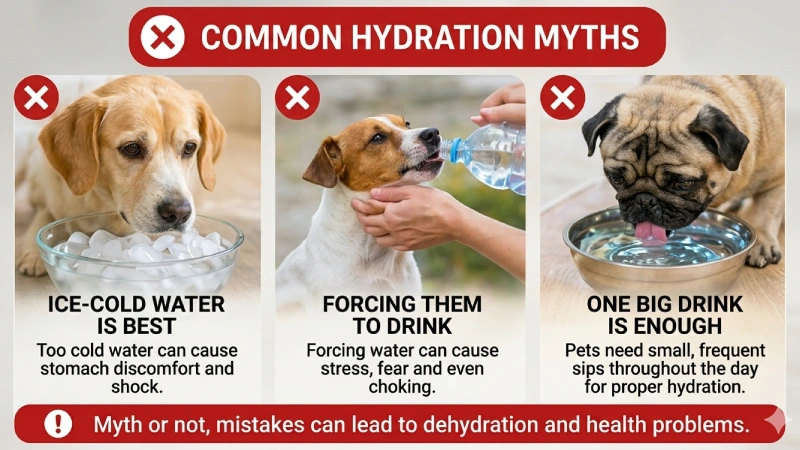
Understanding these myths can help you avoid common mistakes.
❌ Myth 1: Ice-Cold Water Is Best for Pets
Many people think ice water helps pets cool down quickly.
⚠️ The Truth
- Extremely cold water may cause discomfort
- Sudden temperature change can upset digestion
✅ Better Choice
- Provide cool or room-temperature water
- Let your pet drink at their own pace
❌ Myth 2: Forcing Your Pet to Drink Is Helpful
Some pet owners try to force water when pets are not drinking.
⚠️ The Problem
- Creates stress and fear
- May cause choking risk
✅ Better Approach
- Encourage gently
- Place water in multiple areas
- Keep bowls clean
❌ Myth 3: One Big Drink Is Enough
⚠️ Why This Is Wrong
- Pets cannot store large amounts of water efficiently
- Long gaps between drinking can lead to dehydration
✅ Correct Method
- Provide small, frequent পানি (water)
- Ensure constant availability
❌ Myth 4: Pets Only Drink When They Need It
⚠️ The Truth
- Some pets do not show thirst clearly
- Dehydration may begin before visible signs
✅ What to Do
- Monitor water intake daily
- Encourage regular drinking
❌ Myth 5: Wet Food Is Enough for Hydration
⚠️ Reality
- Wet food contains moisture
- But it is not a complete replacement for water
✅ Best Practice
- Always provide fresh drinking water
Signs Your Pet May Be Dehydrated ⚠️
Recognizing early signs is very important.
🐾 Early Signs
- Dry nose or gums
- Reduced energy
- Less interest in food
⚠️ Advanced Signs
- Sunken eyes
- Weakness
- Heavy panting
👉 If symptoms worsen, seek veterinary advice.
How Much Water Does Your Pet Need?
Water needs vary depending on several factors.
🐕 Dogs
- Larger dogs need more water
- Active dogs lose more fluids
🐈 Cats
- Naturally drink less
- Need encouragement
📊 Factors That Affect Water Intake
- Weather conditions
- Activity level
- Diet type
👉 Always adjust based on your pet’s lifestyle.
Best Ways to Keep Your Pet Hydrated
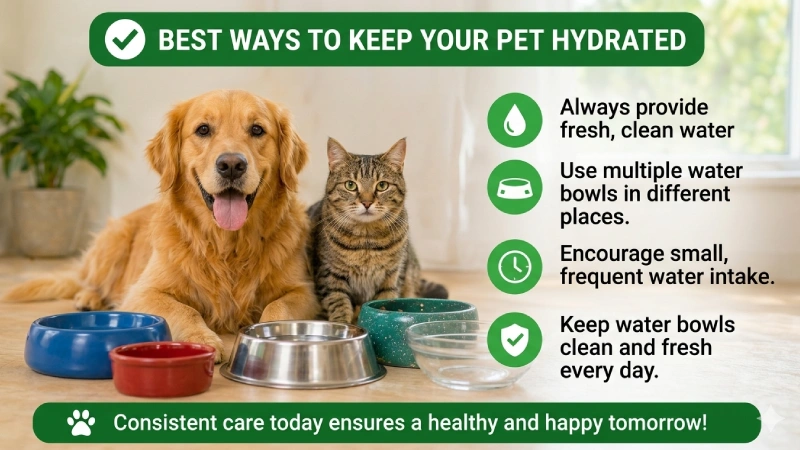
✅Provide Fresh Water Daily
- Change water regularly
- Keep bowls clean
✅Use Multiple Water Stations
- Place bowls in different rooms
- Make access easy
✅Encourage After Activity
- Offer water after playtime
- Offer water after walks
✅Maintain Hygiene
- Clean bowls prevent bacteria buildup
Hydration Tips During Warm Weather
🌞 Increase Water Availability
- Add extra bowls
- Check frequently
🧊 Keep Water Cool (Not Cold)
- Refresh water often
🐾 Limit Heat Exposure
- Avoid peak heat hours
Travel Hydration Tips
🚗 Carry Water Everywhere
- Never travel without water
🥤 Use Portable Bowls
- Easy to use during trips
⏱️ Offer Small Amounts Frequently
- Avoid large amounts at once
Indoor vs Outdoor Hydration Needs
🏠 Indoor Pets
- May forget to drink
- Need reminders
🌳 Outdoor Pets
- Lose more water
- Require frequent hydration
Extra Tips to Improve Your Pet’s Water Intake
Sometimes pets drink less than needed. Here are simple ways to improve their hydration habits.
💡Add Variety
- Change water bowl location
- Use different bowl types
💡Keep Water Fresh
- Pets prefer clean water
- Replace stale water regularly
💡Observe Preferences
- Some pets like quiet areas
- Others prefer open spaces
👉 Small changes can increase water intake.
Seasonal Hydration Changes
🌞 Summer
- Higher water needs
- Increased risk of dehydration
❄️ Winter
- Pets may drink less
- Still need regular hydration
👉 Hydration is important all year round.
Common Mistakes to Avoid
❌ Giving Ice-Cold Water
May cause discomfort.
❌ Forcing Water
Creates stress.
❌ Ignoring Drinking Patterns
Changes can indicate health issues.
❌ Dirty Water Bowls
Reduces interest in drinking.
Long-Term Hydration Habits
Build a Routine
- Keep consistent water locations
- Refill at the same times daily
Stay Observant
- Monitor behavior changes
- Adjust as needed
👉 Consistency keeps your pet healthy.
Conclusion
Proper hydration is one of the simplest yet most important aspects of pet care. While it may seem easy, common myths can lead to unhealthy habits if not corrected.
Avoid giving ice-cold water, never force your pet to drink, and always provide small, frequent access to fresh water.
Understanding your pet’s natural behavior and needs will help you create a safe and healthy routine.
With the right approach, you can ensure your pet stays happy, active, and well-hydrated every day.
At Earth Paw Pets, we believe that small daily habits create a big impact on your pet’s health.
Disclaimer: The information provided in this blog post is for educational and informational purposes only and is not intended as a substitute for professional veterinary advice, diagnosis, or treatment. Always seek the guidance of your veterinarian with any questions you may have regarding your pet’s health or behavior. Never disregard professional veterinary advice or delay in seeking it because of something you have read here.
FAQ
A1: It’s better to give cool or room-temperature water.
A2: No, it can cause stress and discomfort.
A3: Small, frequent drinking is best.
A4: Yes, especially in warm weather.
A5: No, fresh water is still necessary.
A6: Dry gums, weakness, and low energy.