Introduction
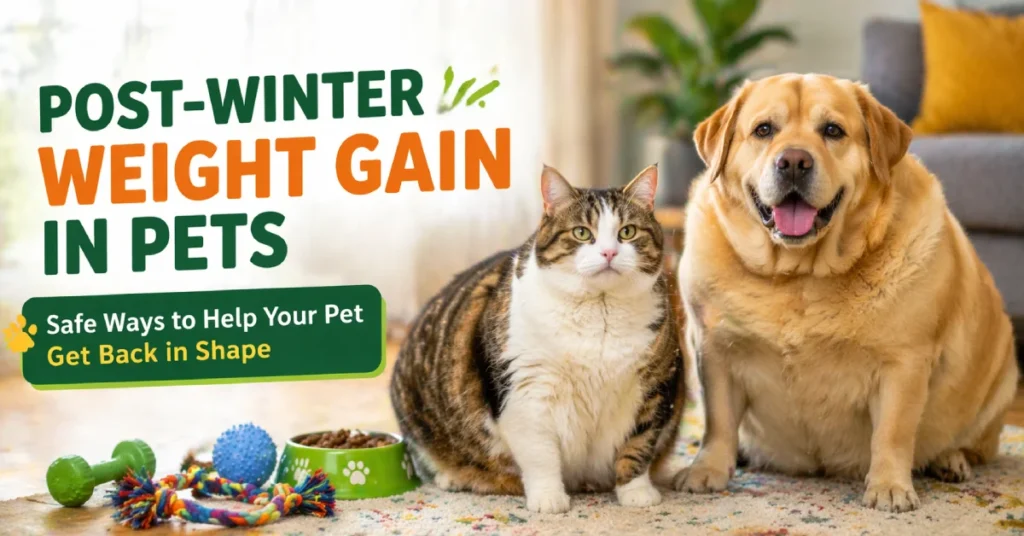
Winter is a cozy and Comfortable season — not just for us, but for our pets as well. With colder temperatures, shorter days, and less outdoor activity, pets naturally become less active. While this may seem harmless, it often leads to a common issue many pet owners overlook: post-winter weight gain in pets.
Have you noticed your pet gaining a little extra weight or becoming less energetic after winter? This is very common. However, ignoring it can lead to long-term health problems.
Extra weight doesn’t just affect appearance — it can increase the risk of obesity, joint stress, and reduced mobility. The good news is that with the right approach, you can safely help your pet return to a healthy weight.
In this guide from Earth Paw Pets, you’ll learn why pets gain weight in winter, the risks involved, and simple, safe ways to help them get back in shape.
Why Do Pets Gain Weight During Winter?
Understanding the cause is the first step to solving the problem.
Less Physical Activity
During winter:
- Pets go outside less
- Walks become shorter
- Playtime decreases
👉 This reduces calorie burning.
Increased Food Intake
Pets may:
- Eat more due to boredom
- Receive extra treats
- Be fed larger portions
Slower Metabolism
Some pets naturally slow down their metabolism in colder months, leading to fat storage.
Comfort Eating and Routine Changes
Just like humans, pets can develop comfort habits.
- Staying indoors increases boredom
- Owners may give more treats
- Routine becomes less active
👉 All these factors contribute to weight gain.
Risks of Post-Winter Weight Gain ⚠️
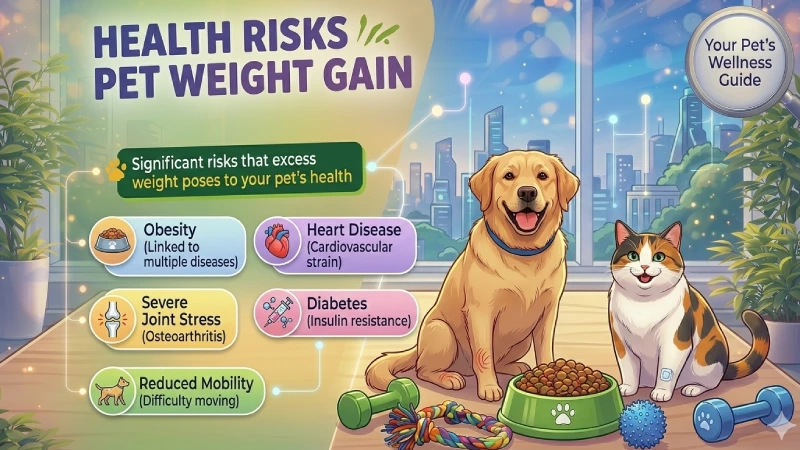
Weight gain is not just a cosmetic issue — it can seriously impact your pet’s health.
🐕 Obesity
If not controlled, extra weight can quickly turn into obesity, which is harder to reverse.
🦴 Joint Stress
Extra body weight puts pressure on joints, leading to:
- Pain
- Stiffness
- Reduced mobility
❤️ Reduced Energy Levels
Overweight pets often:
- Get tired quickly
- Avoid activity
- Sleep more
🫁 Breathing Difficulty
Excess weight can make it harder for pets to breathe comfortably, especially during activity.
Signs Your Pet Has Gained Weight
Sometimes weight gain happens slowly, making it hard to notice.
Common Signs
- No visible waistline
- Belly appears larger
- Difficulty moving or jumping
- Tiring easily
- Less interest in playing
👉 Regular observation helps detect these changes early.
Safe Ways to Help Your Pet Lose Weight
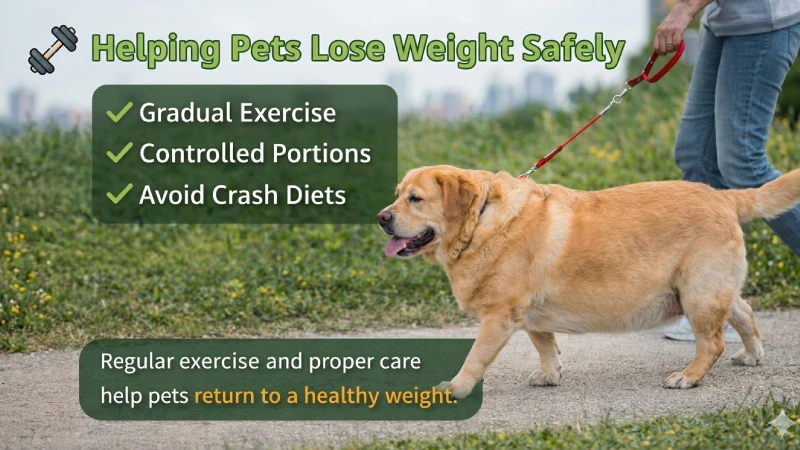
Weight loss should always be gradual and safe.
✅ Start with Gradual Exercise
- Begin with short walks
- Slowly increase duration
- Add light play activities
👉 Avoid sudden intense exercise, as it can harm your pet.
Control Food Portions
- Measure food accurately
- Follow feeding guidelines
- Avoid overfeeding
Maintain a Feeding Schedule
- Feed at the same time daily
- Avoid random snacks
- Limit treats
Encourage Active Play
Make activity enjoyable:
- Use toys
- Play interactive games
- Keep your pet mentally stimulated
Why Crash Diets Are Dangerous ❌
Trying to reduce weight quickly can cause more harm than good.
Risks of Crash Dieting
- Nutritional deficiencies
- Weakness
- Loss of muscle
- Health complications
👉 Always focus on gradual, healthy weight loss.
Creating a Healthy Routine After Winter
Consistency is key to long-term success.
Daily Activity Plan
- Morning walk
- Midday playtime
- Evening light activity
Structured Feeding Routine
- Fixed meal times
- Balanced portions
- No unnecessary treats
Indoor Exercise Ideas
Bad weather shouldn’t stop your pet from staying active.
🏠 Fun Indoor Activities
- Indoor fetch
- Tug games
- Puzzle toys
🐾 Simple Movement Games
- Hide and seek
- Follow-the-toy games
- Training sessions
How Diet Plays a Key Role
Nutrition is essential for maintaining a healthy weight.
🥗 Balanced Nutrition
A good diet supports:
- Weight control
- Energy levels
- Overall health
🍽️ Avoid Overfeeding
- Stick to recommended portions
- Don’t give extra food
🥦 Healthy Treat Alternatives
Instead of unhealthy treats:
- Use small portions
- Keep treats limited
Monitoring Your Pet’s Progress
Tracking progress helps you stay on the right path.
What to Observe
- Weight changes
- Energy levels
- Activity patterns
👉 Even small improvements matter.
Building Long-Term Healthy Habits
Weight management is not a short-term goal — it’s a lifestyle.
Stay Consistent
- Maintain daily routines
- Keep exercise regular
Keep Your Pet Engaged
- Introduce new games
- Change activities occasionally
Avoid Seasonal Setbacks
- Stay active even in colder months
- Adjust routine when needed
Common Mistakes to Avoid
❌ Overfeeding
Too much food leads to weight gain.
❌ Lack of Exercise
Inactive pets gain weight quickly.
❌ Sudden Diet Changes
Abrupt changes can upset your pet’s system.
❌ Ignoring Early Signs
Small changes can become serious problems.
❌ Crash Dieting
Fast weight loss is unsafe and harmful.
When Should You See a Vet? ⚠️
Consult a veterinarian if:
- Weight gain is excessive
- Your pet has difficulty moving
- No improvement despite efforts
- You are unsure about diet
Extra Tips for Pet Owners
- Keep a regular routine
- Spend quality time with your pet
- Provide fresh water
- Observe behavior closely
Conclusion
Post-winter weight gain in pets is common, but it should not be ignored. With less activity and changes in routine, pets can easily gain extra weight during colder months.
The key to solving this problem is simple: gradual exercise, portion control, and a consistent routine. Avoid quick fixes like crash diets and focus on long-term health.
With proper care and attention, your pet can safely return to a healthy weight and enjoy an active, happy life.
At Earth Paw Pets, we believe that small daily efforts lead to big improvements in your pet’s well-being.
Disclaimer: The information provided in this blog post is for educational and informational purposes only and is not intended as a substitute for professional veterinary advice, diagnosis, or treatment. Always seek the guidance of your veterinarian with any questions you may have regarding your pet’s health or behavior. Never disregard professional veterinary advice or delay in seeking it because of something you have read here.
FAQ
A1: Less activity and more food intake cause weight gain.
A2: Yes, it can lead to obesity and joint issues.
A3: Use gradual exercise and portion control.
A4: No, sudden changes can harm your pet.
A5: It varies, but slow progress is best.
A6: If weight gain is severe or persistent.