
Introduction
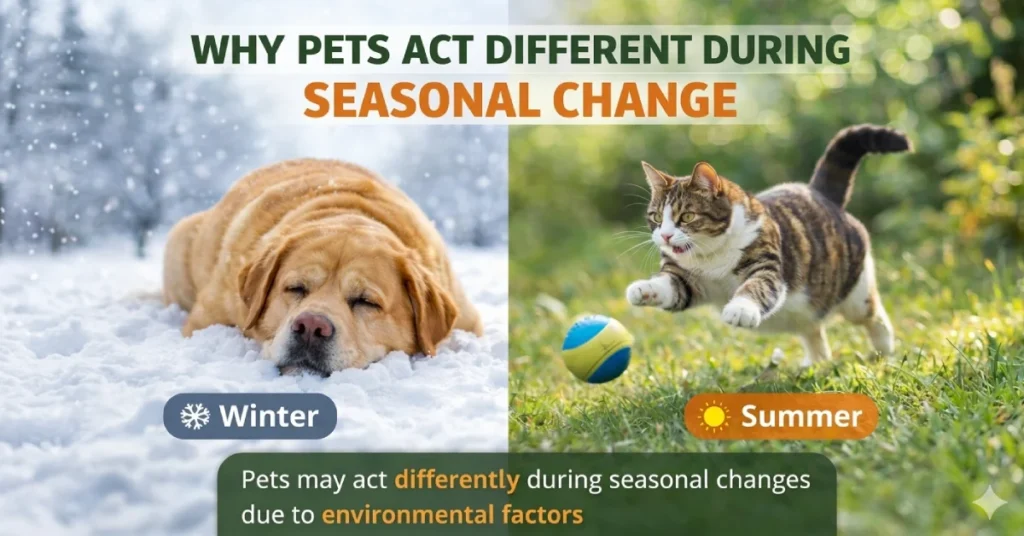
Have you ever noticed your pet acting differently when the season changes? Maybe your dog suddenly becomes lazy in winter, your cat becomes more playful in spring, or your usually calm pet becomes irritable without any clear reason.
These changes can feel confusing and even worrying for pet owners. You may wonder if something is wrong or if your pet is unwell. However, in most cases, these behavioral changes are completely natural.
Seasonal changes affect not only humans but also animals. Factors like daylight, temperature, and hormonal shifts play a major role in influencing your pet’s mood, energy levels, and overall behavior.
Understanding these changes is important because it helps you respond correctly instead of overreacting or ignoring important signs.
In this complete guide from Earth Paw Pets, you will learn why pets act differently during seasonal changes, what causes these shifts, how they vary between pets, and what you can do to support your pet throughout the year.
How Seasonal Changes Affect Pets
Seasonal changes influence both the physical and emotional state of pets. These changes may be subtle or noticeable depending on the pet and environment.
🌞 Daylight Changes
Daylight is one of the most important factors affecting your pet’s behavior.
- Longer days (spring and summer) increase activity levels
- Shorter days (autumn and winter) encourage rest
Pets rely on natural light to regulate their internal body clock, also known as the circadian rhythm.
👉 This is why your pet may feel more energetic in summer and more sleepy in winter.
🌡️ Temperature Changes
Temperature directly impacts comfort and energy.
- Cold weather may reduce movement
- Hot weather can make pets avoid activity
Pets adjust their behavior to stay comfortable and conserve energy.
🧬 Hormonal Changes
Seasonal light changes affect hormones that control mood and behavior.
- Hormones influence sleep patterns
- They affect appetite and energy levels
- They can also impact mood
🌿 Environmental Changes
Each season brings new smells, sounds, and surroundings.
- Spring → flowers, pollen
- Winter → closed indoor environment
- Summer → outdoor activity
👉 These changes stimulate your pet’s senses and behavior.
Common Behavioral Changes in Pets
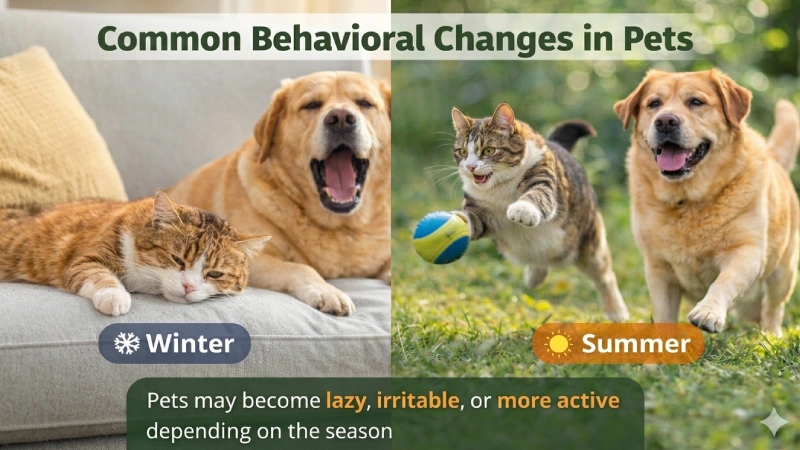
Pets react differently, but some common patterns are seen across most animals.
💤 Increased Laziness
In colder months, pets often:
- Sleep more
- Avoid movement
- Show low energy
This is a natural response to conserve energy.
⚡ Increased Energy and Hyperactivity
In warmer seasons, pets may:
- Become more playful
- Seek attention
- Show excitement
😠 Irritability or Mood Swings
Some pets become:
- Easily annoyed
- Less tolerant
- More sensitive
🍽️ Changes in Appetite
- Increased appetite in winter
- Reduced appetite in summer
🐕 Changes in Social Behavior
Pets may:
- Become more attached
- Or prefer isolation
Why Do These Behavioral Changes Happen?
🌗 Circadian Rhythm (Internal Clock)
Pets have an internal biological clock influenced by daylight.
- Light signals activity
- Darkness signals rest
🧠 Mental Stimulation Levels
Reduced activity can cause:
- Boredom
- Frustration
- Behavioral issues
🌍 Environmental Adaptation
Pets naturally adapt to:
- Weather
- Surroundings
- Routine changes
Seasonal Behavior Differences in Dogs vs Cats
Dogs
Dogs are more expressive.
- Winter → lazy, calm
- Summer → active, energetic
Cats
Cats show subtle changes:
- Increased grooming
- Mood changes
- Sleep pattern shifts
Impact of Seasonal Change on Pet Sleep Patterns
Sleep is one of the most noticeable changes.
Winter Sleep Patterns
- Longer sleep duration
- Less daytime activity
Summer Sleep Patterns
- Shorter sleep cycles
- More active during cooler times
👉 Changes in sleep are usually normal unless extreme.
Emotional Impact of Seasonal Changes
Pets experience emotional changes too.
Signs of Emotional Changes
- Seeking more attention
- Avoiding interaction
- Sudden behavior shifts
Causes
- Reduced activity
- Environmental stress
- Hormonal influence
How to Help Your Pet Adjust to Seasonal Changes

✅ Maintain a Consistent Routine
Routine helps reduce confusion.
- Fixed feeding time
- Regular walks
- Consistent sleep schedule
✅ Provide Daily Exercise
Even during extreme weather:
- Indoor play
- Short outdoor sessions
✅Offer Mental Stimulation
- Toys
- Training
- Interactive games
✅ Adjust Environment
- Keep warm in winter
- Keep cool in summer
✅ Monitor Behavior
- Observe daily habits
- Track changes
Indoor Activities for Seasonal Adjustment
🏠 For Cold Weather
- Indoor games
- Short training sessions
- Puzzle toys
☀️ For Hot Weather
- Play during cooler hours
- Provide shaded rest areas
Helpful Tips for Pet Owners
- Stay consistent
- Observe changes
- Keep environment comfortable
- Provide fresh water
Common Mistakes to Avoid
❌ Ignoring Behavioral Changes
Small changes can become bigger issues.
❌ Lack of Routine
Pets need consistency.
❌ Overreacting
Not all changes are harmful.
❌ Not Providing Activity
Leads to boredom and stress.
❌ Sudden Routine Changes
Can confuse your pet.
When Should You Be Concerned? ⚠️
Seek veterinary advice if:
- Behavior changes are extreme
- Appetite loss continues
- Sudden aggression appears
- Your pet seems stressed or uncomfortable
Long-Term Behavioral Management
Build Strong Habits
- Routine
- Exercise
- Balanced environment
Stay Observant
Understanding your pet helps long-term care.
Be Patient
Adjustment takes time.
Creating a Balanced Lifestyle for Your Pet
Daily Structure
- Feeding
- Activity
- Rest
Emotional Well-being
- Spend time together
- Provide attention
Final Thoughts
Seasonal changes are a natural part of life, and your pet’s behavior will naturally adjust with them. From increased laziness in winter to bursts of energy in summer, these changes are influenced by daylight, temperature, and hormonal shifts.
The key is to understand these patterns instead of worrying unnecessarily. By maintaining a stable routine, providing regular activity, and observing your pet closely, you can ensure they remain happy, comfortable, and healthy throughout the year.
At Earth Paw Pets, we believe that understanding your pet’s behavior is the foundation of a strong and loving relationship.
Conclusion
Pets act differently during seasonal changes due to natural environmental and biological factors. These changes are usually normal and manageable with proper care.
By staying aware, maintaining routines, and supporting your pet’s needs, you can help them adjust smoothly to every season.
Disclaimer: The information provided in this blog post is for educational and informational purposes only and is not intended as a substitute for professional veterinary advice, diagnosis, or treatment. Always seek the guidance of your veterinarian with any questions you may have regarding your pet’s health or behavior. Never disregard professional veterinary advice or delay in seeking it because of something you have read here.
FAQ
A1: Due to daylight, temperature, and hormonal changes.
A2: Yes, it is natural.
A3: Longer daylight increases energy.
A4: Only if they are extreme or persistent.
A5: Maintain routine and provide activity.
A6: No, each pet reacts differently.