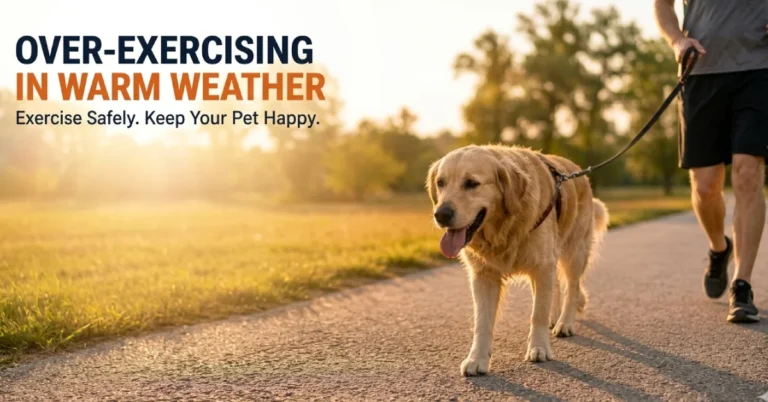
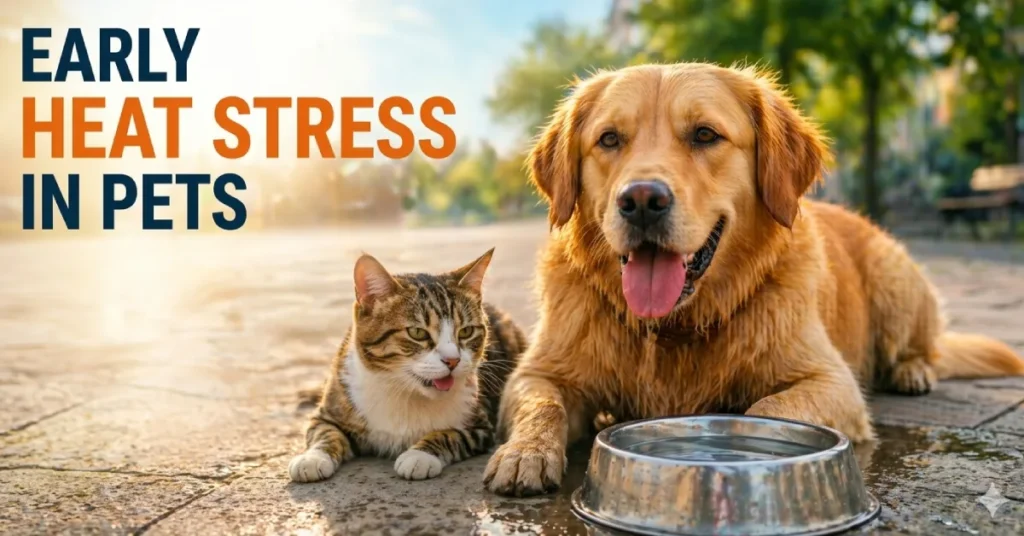
Introduction
Warm weather brings longer days, outdoor fun, and more time with your pets. Whether it’s a walk in the morning or playtime in the yard, pets naturally enjoy being active when the weather feels nice.
However, rising temperatures also bring a hidden danger that many pet owners underestimate — early heat stress in pets.
Unlike humans, pets cannot regulate their body temperature efficiently. Dogs mainly rely on panting, while cats have limited ways to cool themselves. This makes them much more vulnerable to overheating, even in conditions that may feel comfortable to you.
The biggest problem is that heat stress doesn’t always happen suddenly. It often starts with small, early signs that are easy to ignore — slightly heavier breathing, mild drooling, or reduced activity.
If these early signs are missed, the condition can quickly become serious.
The good news is that with awareness and quick action, heat stress is highly preventable.
In this complete guide from Earth Paw Pets, you’ll learn how to detect early heat stress, understand its causes, prevent it effectively, and respond quickly if your pet is affected.
What Is Heat Stress in Pets?
Heat stress occurs when your pet’s body temperature rises above a safe level and they cannot cool down naturally.
🌡️ How Pets Regulate Temperature
Pets regulate heat differently:
- Dogs cool themselves by panting
- Cats rely on grooming and limited sweating through paws
👉 These methods are less effective in high temperatures.
⚠️ Why Heat Stress Is Dangerous
When a pet overheats:
- Body systems become strained
- Hydration levels drop quickly
- Internal organs can be affected
👉 Without quick action, it can lead to heatstroke.
Early Signs of Heat Stress
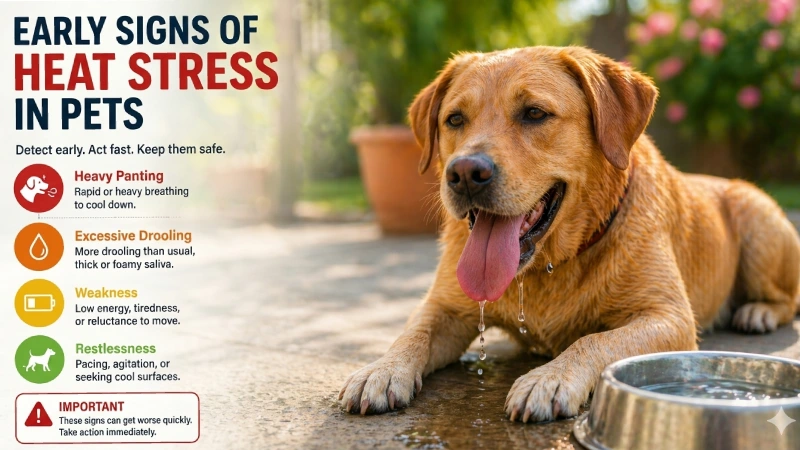
Recognizing early symptoms is the key to prevention.
🐶 Common Early Signs
- Rapid or heavy panting
- Excessive drooling
- Low energy or weakness
- Restlessness
😿 Subtle Signs in Cats
- Hiding more than usual
- Reduced movement
- Quiet discomfort
💡 Behavioral Changes
- Seeking cooler surfaces
- Drinking more water
- Avoiding activity
👉 These signs should never be ignored.
Advanced Signs (Emergency Stage) ⚠️
If heat stress worsens, symptoms become severe:
- Vomiting
- Difficulty standing or walking
- Confusion
- Collapse
👉 This is a medical emergency.
Causes of Heat Stress in Pets
☀️ High Temperature Exposure
- Direct sunlight
- Hot weather conditions
🏠 Poor Ventilation
- Closed rooms
- Limited airflow
🐾 Excessive Exercise
- Running or playing in heat
- Long walks during hot hours
🚗 Enclosed Spaces
- Parked cars
- Small areas without airflow
🧬 Physical Factors
- Thick fur
- Overweight pets
- Short-nosed breeds
Why Early Detection Matters
Heat stress can progress quickly.
🔄 Rapid Escalation
- Mild symptoms → severe condition in minutes
❤️ Impact on Health
- Stress on heart and lungs
- Risk of dehydration
👉 Early action prevents serious complications.
How to Prevent Heat Stress
✅Provide Fresh Water Always
- Keep water bowls full
- Change water regularly
✅Create a Cool Environment
- Provide shaded areas
- Use fans or ventilation
✅Avoid Peak Heat Hours
- Walk early morning or evening
✅Limit Physical Activity
- Reduce playtime during hot periods
✅Use Cooling Surfaces
- Tiles or cool mats
Safe Outdoor Practices
🌳 Choose the Right Time
- Early morning
- Late evening
🐾 Check Ground Temperature
- Hot surfaces can burn paws
💧 Carry Water
- Keep your pet hydrated
🛑 Take Breaks
- Allow rest frequently
Indoor Safety Tips
🏠 Keep Airflow Strong
- Open windows safely
- Use fans
🧊 Provide Cool Spots
- Shaded corners
- Cool flooring
🚫 Avoid Overcrowded Spaces
- Ensure your pet has space to move
What To Do If Your Pet Shows Heat Stress
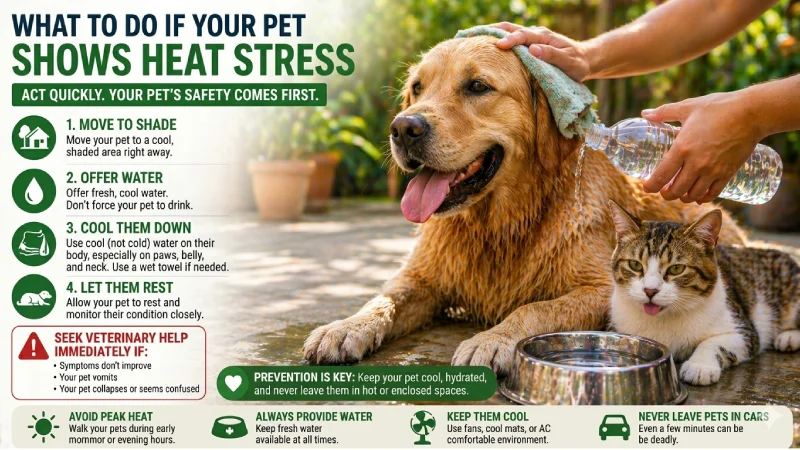
🚨 Immediate Steps
- Move your pet to a cool, shaded area
- Offer clean water
- Use cool (not cold) water on body
- Allow rest
⚠️ Important Note
- Do not use ice-cold water
- Avoid sudden temperature changes
When to Contact a Veterinarian ⚠️
Seek professional help if:
- Symptoms continue
- Your pet collapses
- There is confusion or vomiting
Differences Between Dogs and Cats
🐕 Dogs
- Show visible signs like panting
- More active outdoors
🐈 Cats
- Hide discomfort
- Show subtle symptoms
👉 Cats require closer observation.
Long-Term Effects of Heat Stress
Repeated exposure can lead to:
- Reduced energy
- Increased sensitivity to heat
- Ongoing health issues
Building a Summer Safety Routine
📅 Daily Routine
- Adjust walking times
- Monitor activity
🧴 Grooming
- Maintain coat properly
- Avoid overheating
🧠 Awareness
- Stay alert to changes
- Act early
Helpful Tips for Pet Owners
- Always carry water outdoors
- Provide shade at all times
- Keep emergency contacts ready
- Monitor behavior closely
Common Mistakes to Avoid
❌ Ignoring Early Signs
Small symptoms can become serious.
❌ Overexercising
Too much activity increases heat risk.
❌ Leaving Pets in Hot Areas
Even short exposure is dangerous.
❌ Using Ice-Cold Water
Can shock your pet’s system.
Emergency Preparedness
🧰 Be Ready
- Know signs of heat stress
- Have a plan
📞 Emergency Contacts
- Keep vet number accessible
🚗 Travel Safety
- Ensure ventilation
- Avoid heat exposure
Creating a Safe Environment at Home
Balance Comfort and Safety
- Maintain airflow
- Avoid overheating
Observe Daily Behavior
- Notice changes
- Take quick action
Conclusion
Heat stress in pets is a serious but preventable condition. As temperatures rise, it becomes essential for pet owners to stay aware and proactive.
By recognizing early signs, providing proper care, and avoiding heat exposure, you can keep your pet safe and comfortable.
Remember, prevention is always better than emergency treatment.
At Earth Paw Pets, we believe that informed pet owners create safer and happier lives for their pets.
Disclaimer: The information provided in this blog post is for educational and informational purposes only and is not intended as a substitute for professional veterinary advice, diagnosis, or treatment. Always seek the guidance of your veterinarian with any questions you may have regarding your pet’s health or behavior. Never disregard professional veterinary advice or delay in seeking it because of something you have read here.
FAQ
A1: It is the initial stage of overheating.
A2: Panting, drooling, and weakness.
A3: Yes, it can become life-threatening.
A4: Provide water, shade, and avoid heat.
A5: Move your pet to a cool area.
A6: Yes, but signs may be less obvious.